Jazz Vinyl
Waltz for Debby: Follow the Trio and Match the Take
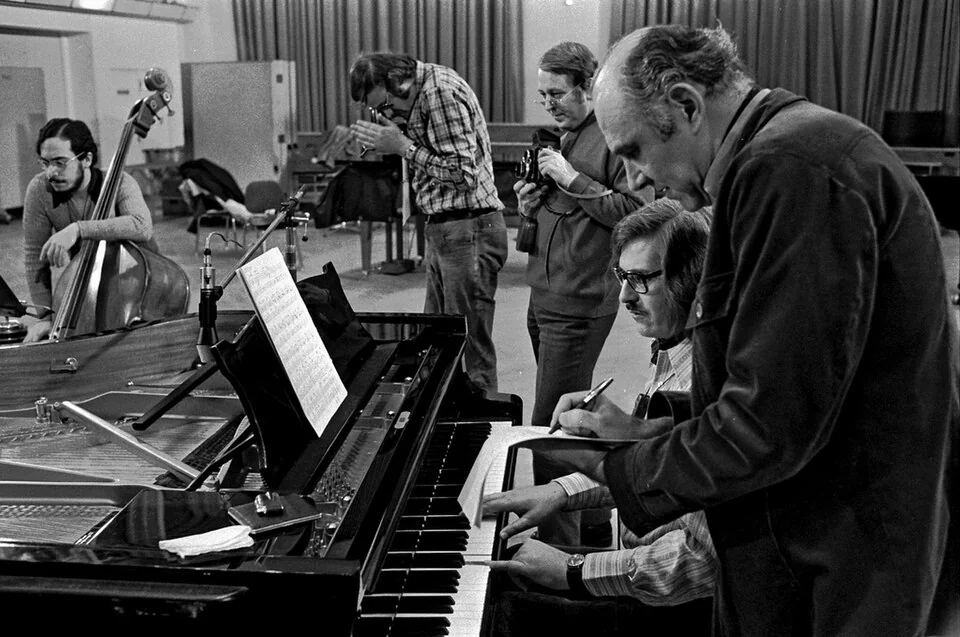

Waltz for Debby and Sunday at the Village Vanguard document the same trio on the same recording day, but they are different albums. That distinction is the most useful place to begin a purchase. You may want the familiar six-track Waltz for Debby program, its companion selection or a fuller account of the June 25, 1961 performances. A shared venue name and a photograph of Bill Evans do not tell you which of those experiences a package contains.
One recording day, two edited album programs
Evans plays piano with Scott LaFaro on bass and Paul Motian on drums. The official account of the 2023 reissues explains that both albums draw from the afternoon and evening sets at New York's Village Vanguard. Sunday at the Village Vanguard places particular emphasis on LaFaro, including his compositions Gloria's Step and Jade Visions. Waltz for Debby selects another six performances, including several familiar songs and Evans's title composition.
This is why buying one does not necessarily duplicate the other. They overlap in occasion and musicians, not simply in identical contents. Conversely, a complete-session edition may contain the material of both along with alternatives and announcements. Decide whether you prefer an album-shaped listening sequence or chronological documentation. Completeness is valuable when it answers that preference; it is not automatically a better introduction.
Follow the six-song route
The original Waltz for Debby sequence moves through My Foolish Heart, Waltz for Debby and Detour Ahead, then My Romance, Some Other Time and Milestones. Use those titles to verify the intended program before comparing packaging. The official 2023 LP announcement lists that sequence across two sides. A product with extra tracks may be a legitimate expanded release, but the additions should be identified rather than quietly treated as the original album.
For an initial listening session, choose My Foolish Heart and Milestones as contrasting starting points. Ask how much space the group leaves and how the players sustain momentum. Then hear the title piece within the full sequence rather than using it as the only sample. These are listening questions you can investigate on a lawful preview or your own copy; they are not claims that we have auditioned every available mastering.
Listen beyond the instrument named on the cover
It is easy to follow only the piano because Evans is the leader. Try a second pass devoted to LaFaro: notice when the bass supports a pulse, suggests another line or answers the piano. On another pass, follow Motian's accents and the way they shape the conversation. You need not turn this into a technical transcription. The practical aim is to hear three active participants rather than a pianist with an anonymous background.
Mark Corroto's All About Jazz review emphasizes that shared role, distinguishing the contributions of bass and drums from routine accompaniment. Use that interpretation as a question for your own hearing, not a command to agree with a reviewer. If a particular passage draws your attention, replay it once while following a different instrument. Hearing your focus change can make the same record rewarding without requiring another purchase.
Know which take you are comparing
The title composition appears in more than one recorded performance from the day. Jazzdisco's sessionography maps take one to the second evening set and take two to the third evening set; it associates the latter with Riverside RLP 399, the original Waltz for Debby program. Expanded releases can include the other performance. The shared composition title does not make the recordings interchangeable, and the difference is not necessarily a change of mastering.
When comparing an LP with a digital release, match the take before drawing conclusions about sound. Otherwise you may be reacting to different phrasing or ensemble choices. Track duration can be a clue, but use the listed take information and release documentation where possible. A comparison note should say which performance was used. That simple discipline is more revealing than declaring that vinyl and digital inherently produce different interpretations of the same solo.
Identify the modern OJC release precisely
The 2023 Original Jazz Classics relaunch announcement credits Kevin Gray at Cohearent Audio with lacquers cut from the original tapes, specifies 180-gram vinyl pressed at RTI and describes tip-on jackets. It lists Waltz for Debby for June 30, 2023. Those details give you a documented candidate when researching a modern LP. They should not be applied automatically to every older OJC record or every product carrying the same album artwork.
OJC has a history preceding that relaunch. Check the particular edition rather than treating the series name as a single unchanging production method. Likewise, a remastered CD listing does not establish the cutting or pressing credits of an LP sold elsewhere. Match the physical format and the actual credits. This guide reports the announced specifications and does not claim that a named pressing will outperform every alternative on your system.
Separate club atmosphere from a faulty disc
These are live club recordings. Reviews discuss audible room activity, including conversation and glasses, as part of the recorded setting. Such sounds can be present on the source recording, so their existence alone does not prove that a used LP is dirty. A click recurring at the same point in a groove, a skip or conspicuous distortion still deserves investigation. Do not explain away every defect as atmosphere either.
If uncertain, compare the same performance through an authorized reference and check your playback setup. Keep the distinction clear: sounds captured in the room, sounds introduced by the physical copy and problems elsewhere in the equipment are different possibilities. Cleaning should address suitable contamination, not erase the recording's environment. The separate care guide explains why repeated treatment cannot promise to restore damaged groove information.
Choose the next step by curiosity
If the interplay interests you, the companion Sunday at the Village Vanguard offers another selection from the day. If specific differences between takes become your question, investigate a documented fuller session release. If you simply want this six-track album, a correctly identified copy may be enough. Let a musical question lead the next purchase rather than treating the number of discs or a collector label as a measure of understanding.