Vintage Rock Vinyl
Disraeli Gears: Hear the Original Album and Compare Its Mixes
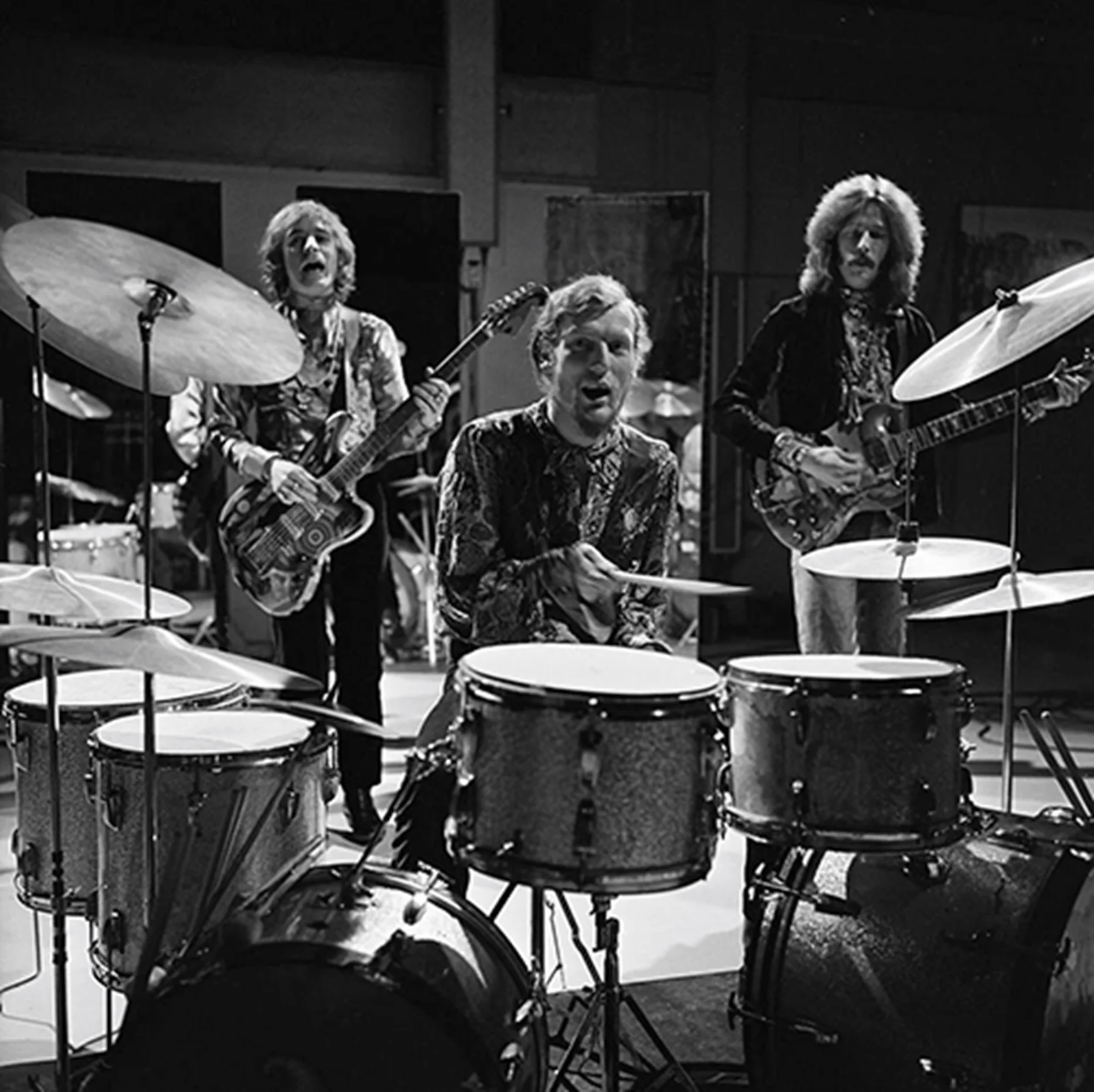

Cream’s Disraeli Gears can be a confusing first purchase because the same eleven songs appear in mono, stereo and expanded packages alongside recordings that are not part of the original album. Start with the sequence, then decide whether you want a compact psychedelic blues record, a comparison of mixes, or a collection of performances. Those are different listening projects, and an expensive copy is not a prerequisite for any of them.
Eric Clapton, Jack Bruce and Ginger Baker recorded the album in New York with producer Felix Pappalardi and engineer Tom Dowd. A label history places the sessions at Atlantic Studios in May 1967. The music moves between short songs, blues material and more unsettled arrangements; it is not simply a document of the band stretching out onstage.
Hear the original eleven songs first
“Strange Brew” opens with a compact vocal and guitar figure. Listen for how the repeated instrumental phrase leaves space around the singing. “Sunshine of Your Love” follows with its famous low riff and a heavier, more deliberate pulse. Playing these together makes a useful starting comparison: both are concise, but their weight and vocal delivery feel different.
The first side continues through “World of Pain,” “Dance the Night Away” and “Blue Condition.” Rather than treating these as space between familiar tracks, notice the changing vocal character and the way the guitar moves between supporting texture and prominent line. “Blue Condition,” sung by Baker on the album, is especially useful when comparing it with the alternate vocal found on a documented expanded edition.
The second side begins with “Tales of Brave Ulysses” and “SWLABR.” The former’s guitar colour contrasts with the sharper motion of the latter. “We’re Going Wrong” changes the mood again; “Outside Woman Blues” and “Take It Back” return to more overt blues reference points. The brief “Mother’s Lament” closes the record in a very different register. Hearing that ending in sequence makes more sense than encountering it as an isolated bonus track.
Mono and stereo are listening choices
A mono mix combines the performance into one channel; a stereo mix distributes material across a left and right image. Both can be reproduced through two speakers, but the placement and balance may differ. A record marked mono is not automatically an earlier pressing, and a stereo label alone does not establish which mastering or source was used.
For a practical comparison, choose one short passage of “Strange Brew” and one denser passage of “Sunshine of Your Love.” Match playback levels as closely as possible, then listen for the position of the vocal, guitar and rhythm section. Repeat without watching the label. A louder transfer can initially sound more exciting, so allow time before deciding which presentation you prefer. Your speakers, headphones and room can also change the impression.
If you want both mixes in one package before buying vinyl, the documented 2004 Deluxe Edition provides the complete stereo album on its first CD and the complete mono album on its second. It is a useful comparison set, not proof that every other issue uses the same mastering. Check the exact listing: similarly named releases may differ by territory, format or track count.
Keep the extras in their own categories
The deluxe track list includes “Lawdy Mama” as an outtake and an alternate “Blue Condition” with Clapton singing. These are studio alternatives, not replacements for the album versions. The difference in vocal makes the latter a particularly clear way to hear a recording decision rather than just a different equalisation of the same performance.
The set also lists demos and BBC session recordings. A demo is a working document; a radio-session performance is a separate performance context. Compare an album track with a session only after noting that distinction. Differences in timing or arrangement may reflect a new performance rather than a mono-versus-stereo mix choice. The digital edition listing labels the selections individually and is useful for checking names before purchase.
For an easy experiment, play the album's “Tales of Brave Ulysses” and then the BBC session with the same title. Note whether the vocal phrasing and instrumental attack feel identical before comparing the recording's overall colour. Write down which performance you are hearing when you make notes: otherwise a preference for one take can be mistaken for a preference for a particular mix. The session is an extra, not a missing part of the original LP.
Inspect the copy, not the story around it
For a used LP, ask for clear photographs of both labels, the sleeve and the runout markings near the label. Compare the complete catalogue number and matrix information with a reliable entry for the specific territory. A familiar psychedelic sleeve can accompany later reissues, and one isolated label feature is not enough to establish an original pressing.
Ask about the record’s actual playback on both sides. Look under angled light for scratches, examine the centre hole and check whether the disc sits flat. A visual grade is helpful but cannot predict every audible problem. If a seller cannot play it, treat surface noise, skips and groove wear as unresolved rather than assuming the best or worst.
Sleeve condition matters separately. Check seam splits, writing, moisture damage and whether the inner sleeve is included. A beautiful cover does not make a worn disc quiet, and a serviceable listening copy need not have a perfect jacket. Request a return agreement if the description leaves an important condition uncertain.
Choose by your actual aim
For the album itself, a clean copy with the eleven-song programme is the simplest place to start. For mix comparison, seek an edition that explicitly identifies both mono and stereo and a player that supports its format. For the group’s wider working process, use the deluxe set’s outtakes, demos and BBC performances as separate chapters.
Write down the catalogue number and the mix you enjoyed before shopping for another copy. That small record of your own listening is more useful than a generic claim that a certain colour label always sounds better. Prices and condition vary; compare completed sales for the exact edition only when you are ready to buy, and leave room in the budget for a copy you can actually play.