Jazz Vinyl
Kind of Blue: Five Performances, Four Sides or Two Documentary CDs?
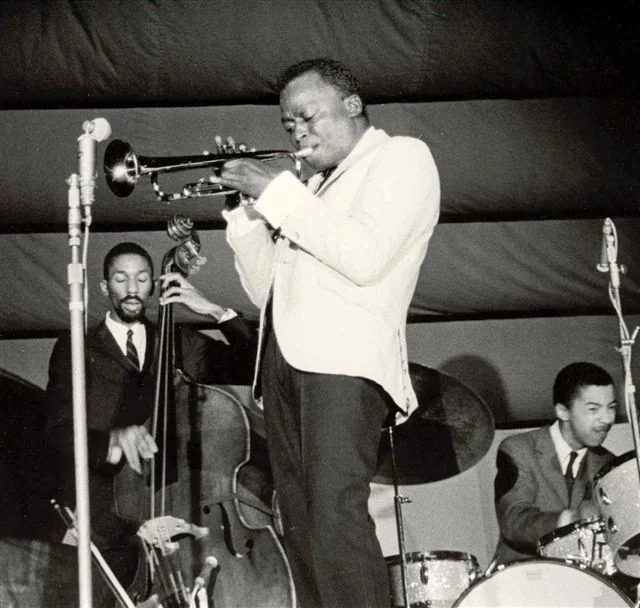

Kind of Blue is available in packages that make very different demands on a listener. A conventional album presents five performances as a compact program. Mobile Fidelity's documented 45-rpm edition spreads those performances over four sides. The Legacy Edition on two CDs adds session material and recordings from outside the album. Before asking which sounds best, decide whether you want uninterrupted listening, a particular physical presentation or a closer study of the musicians at work.
Learn the five-track album before buying the extras
The original sequence is So What, Freddie Freeloader, Blue in Green, All Blues and Flamenco Sketches. The official Miles Davis account describes music organized around relatively open harmonic structures, giving improvisers room to shape their statements. You do not need to master the term modal before listening. Begin by following one musician through a performance and noticing when another takes over, rather than trying to absorb every instrumental line simultaneously.
The piano credits provide a particularly useful comparison. Wynton Kelly appears on Freddie Freeloader, while Bill Evans is central to the rest of the program. Listen to the way the piano interacts with the trumpet and saxophones across those different settings. That is an invitation to hear a musical distinction, not a claim that one pianist or pressing is superior. Returning to the five pieces with a focused question can teach you more than immediately accumulating editions.
The official Legacy documentation places the first three titles at the March 2, 1959 sessions and the last two at the April 22 session, all at Columbia's 30th Street studio. Recording dates establish the performances' history. They do not date the manufacture of a particular record. A sleeve carrying a 1959 copyright statement may accompany a much later release; identifying that release requires its own information.
Understand what four sides change
Mobile Fidelity identifies its numbered 180-gram two-LP box as MFSL2-45-011 and specifies 45 rpm. Its track list puts So What on side A, Freddie Freeloader and Blue in Green on side B, All Blues on side C and Flamenco Sketches on side D. This is still the five-performance album. Two records do not automatically mean additional music, and a higher disc count should not be confused with an expanded session collection.
The practical consequence is more interaction with the turntable. You will turn or change a disc between So What and Freddie Freeloader, and again before each of the last two performances. Some listeners enjoy that pace; others prefer fewer interruptions. Neither preference requires an argument about fidelity. If you usually listen while reading or following the whole sequence, consider how the physical arrangement fits that routine before paying for the package.
Verify that your turntable can play the specified speed and that you know how to change it. Playing a 45-rpm record at the wrong setting creates a large and obvious pitch and timing error. That is separate from historical questions about the recording tapes. Do not attribute every unusual playback speed to an obscure mastering issue before checking the actual edition and your player's setting.
Read the production chain without skipping a stage
The Mobile Fidelity page states a chain from a quarter-inch, 15-ips Dolby SR analog remix master through DSD 64, then an analog console and a lathe. This is a specific disclosure, including a digital stage. It should not be shortened to an all-analog claim simply because other wording mentions original master tapes or an analog system. Equally, the presence of DSD does not independently establish how you will judge the resulting record.
Three questions remain distinct: which mix is used, what mastering or transfer process is documented, and how the physical copy plays. Answering one does not answer the others. A remix master is not merely another name for an untouched original mix; an analog source can still pass through a digital transfer. Read the complete credit for the edition you are considering rather than transferring a familiar label's reputation to an unidentified copy.
Decide whether the Legacy Edition is a study purchase
The official account explicitly describes the Legacy Edition as a double-CD package. Its first disc includes the original album, an alternate Flamenco Sketches, short studio sequences and a Freddie Freeloader false start. Those fragments provide a different kind of listening: you can examine how a performance begins or how a decision changes. A false start is deliberately included documentation, not evidence that the CD or a player is malfunctioning.
The second disc moves beyond the album sessions. It includes material from May 1958 and a live So What from April 1960. This distinction prevents a common misunderstanding: more tracks under the Kind of Blue title do not all come from the same studio date or lineup. If you want the original album on vinyl, the extra CD material is not a substitute. If you want context, it offers identifiable comparisons rather than simply a longer playlist.
Use the alternate Flamenco Sketches as a first exercise. Hear the familiar performance, then the alternate, and describe one change in phrasing or the way space is used. Avoid trying to rank every solo immediately. The point is to recognize that a composition can support different choices while retaining its identity. You can make that discovery without buying a rare pressing or claiming that spontaneous playing means nothing was prepared.
Keep historical speed claims separate from your decision
You may encounter listings that advertise corrected speed or a specific historical tape version. Treat those as edition-specific claims requiring documentation. This guide does not verify every release's speed treatment, and it supplies no universal rule that everything after a certain year is identical. Ask which transfer or mix the named product uses and retain the explanation. An old date, a colored label or the word remastered does not settle the issue.
For a first purchase, choose the five performances in a format and condition you can use. Investigate the four-side version if its documented production and playing routine interest you. Choose the Legacy package when its additional sessions answer a listening question you already have. Each is a defensible route into the same album when you know what changes, what stays and what the documentation leaves unresolved.