Jazz Vinyl
At the Village Gate: Follow the Quartet and Verify the Eight-Song Set
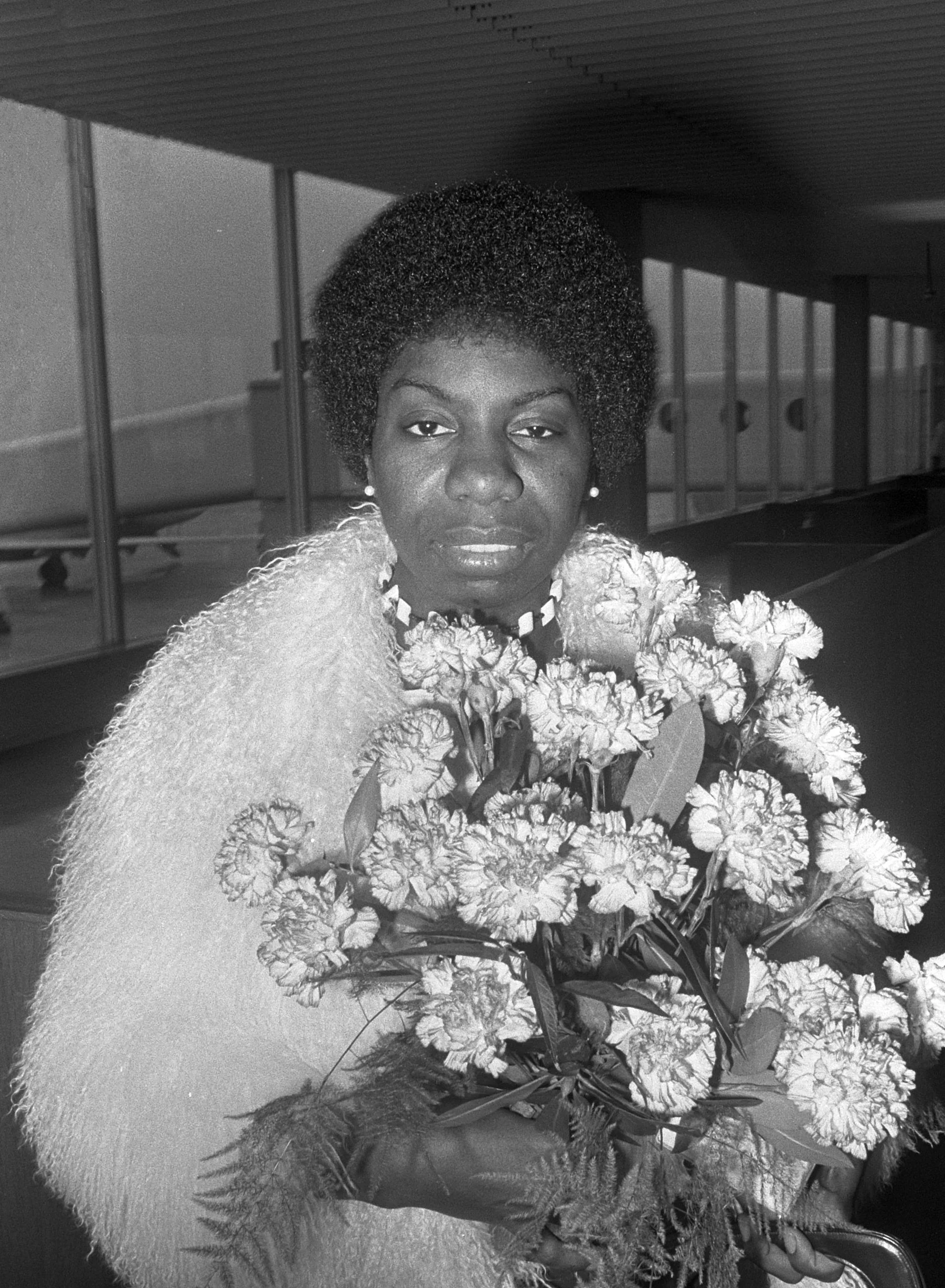

Before choosing a copy of Nina Simone’s Village Gate album, settle one simple question: do you want the original eight-song concert program or a later expanded edition? The title appears in catalogues as At the Village Gate, Nina Simone at the Village Gate and, less formally, Nina at the Village Gate. Those names point to a 1962 Colpix release built from a 1961 New York performance. Simone sings and plays piano with Al Schackman on guitar, Chris White on bass and Bobby Hamilton on drums. The familiar album is a compact set whose styles move from a Broadway standard to folk, pop standards and spiritual material. A reissue may add selections, so use the sequence and edition details below before buying.
Identify the performance and the album
The estate’s discography places the session at the Village Gate in New York in 1961 and lists the Colpix release in 1962 under catalog numbers CP 421 and SCP 421. Warner Music Japan’s later reissue page identifies the recording as a live performance from April 1961 and prints the eight familiar titles. These dates answer different questions: 1961 is the performance date, while 1962 is the album’s release year. When a seller’s listing gives only a year, ask whether it describes the concert or the copy being sold.
The personnel also help distinguish this record from other Simone releases carrying similar venue language. This is not Nina Simone in Concert or a collection of later festival recordings. The official page names a small quartet with Simone at piano and microphone, Schackman on guitar, White on bass and Hamilton on drums. If a listing includes a different set of players, a substantially longer program or a different label, check the back cover and catalog number before treating it as the same edition.
Follow the opening three-song arc
Use the sequence as a listening map rather than trying to classify the whole set with one genre label. “Just in Time” opens with material from the Broadway musical Bells Are Ringing. “He Was Too Good to Me” follows, then Simone turns to “House of the Rising Sun.” That change is useful for a first listen: note what remains recognizable as the same singer and quartet even as the source material shifts. The estate’s notes specifically call out the movement from Broadway to folk repertoire; you can test that observation against the actual performances without needing a theory vocabulary.
For a short comparison, replay only the first minute of the opening track and the beginning of “House of the Rising Sun.” Write down which instrument gives you the clearest point of reference. It may be the piano, guitar or bass; there is no required answer. Then listen to the transitions between vocal lines and accompaniment. This task gives a new listener something more concrete than asking whether the record sounds “jazzy” or “dramatic,” and it works whether you own an LP, CD or authorized digital version.
Listen for how the set changes register
The middle of the standard program places “Bye Bye Blackbird,” “Brown Baby” and “Zungo” in succession. Rather than assuming every concert album follows a single mood, compare the song choices and the role you hear for the rhythm section. “Bye Bye Blackbird” is a pre-existing popular standard; the track-level credit list for this release attributes “Brown Baby” to Oscar Brown Jr. and “Zungo” to Babatunde Olatunji. The credits help separate the repertoire’s origins from Simone’s performance of it. If you are building a playlist or writing notes, keep “songwriter,” “performer” and “arranger” as distinct fields rather than assigning every title to the album’s leader.
You can make the same comparison with the closing pair, “If He Changed My Name” and “Children Go Where I Send You.” Their titles and credits point toward spiritual and traditional material, but a title alone cannot describe the full arrangement. Listen once without reading a review, then check the credits and notice whether the extra context changes your interpretation. Avoid quoting lyrics as a shortcut: a few details about sequence, personnel and provenance are enough to explain why the set moves across more than one repertory.
Keep the eight-song LP separate from expansions
The estate’s discography lists a 2005 expanded edition and names four additions: “Eretz Zavat Chalav U’dvash,” “Vaynikehu,” “Sinnerman” and “You’ll Never Walk Alone.” Those added titles are not part of the eight-song sequence printed by Warner Music Japan for its 2016 CD reissue. A streaming service or compilation can therefore show more tracks than a standard edition without the underlying 1961 concert album itself having changed into a different original LP program.
Before purchasing, open the exact edition page or ask the seller for a photograph of the back cover. Count the tracks and compare their spelling and order with the eight-title list. If the copy is advertised as expanded, ask which four additions it contains and whether they appear on the same disc, a second disc or a separate release. This is especially useful when a listing combines a familiar cover image with metadata copied from a later CD. Do not use a generic “deluxe” label as proof that a particular bonus track is present.
Use catalog numbers as clues, not a verdict
CP 421 and SCP 421 are the catalog numbers shown on the official Nina Simone page for the Colpix LP. They are useful starting points when a seller claims an early copy, but a catalog number by itself does not authenticate every copy or establish its physical condition. Compare the label wording, jacket information, country, format and runout inscriptions with a release-specific reference. Ask for clear, unedited photographs if the precise issue matters to you.
The same discipline applies to the word “stereo,” a colored label or a date in a database. Record those details as evidence to compare, not as automatic proof of an original pressing or a sound-quality ranking. The artist’s archive lists CP 421 and SCP 421 but does not provide a listening test that ranks every later transfer. If you care about the mastering, choose an edition with documented credits for that exact release and keep the evidence attached to that edition alone.
A practical first-listen plan
On the first pass, play the standard eight-song sequence without pausing and mark one track where the quartet’s interaction caught your attention. On the second pass, compare one of the opening standards with “Zungo” or “Children Go Where I Send You.” Write down which player you followed and whether the difference came from the source song, the vocal approach or the accompaniment. This is a simple, repeatable way to decide whether you want the intimate quartet performance as a whole or mainly one familiar song.