Indie Folk
Cruel Sister: How to Listen to Pentangle’s Long Ballad Side
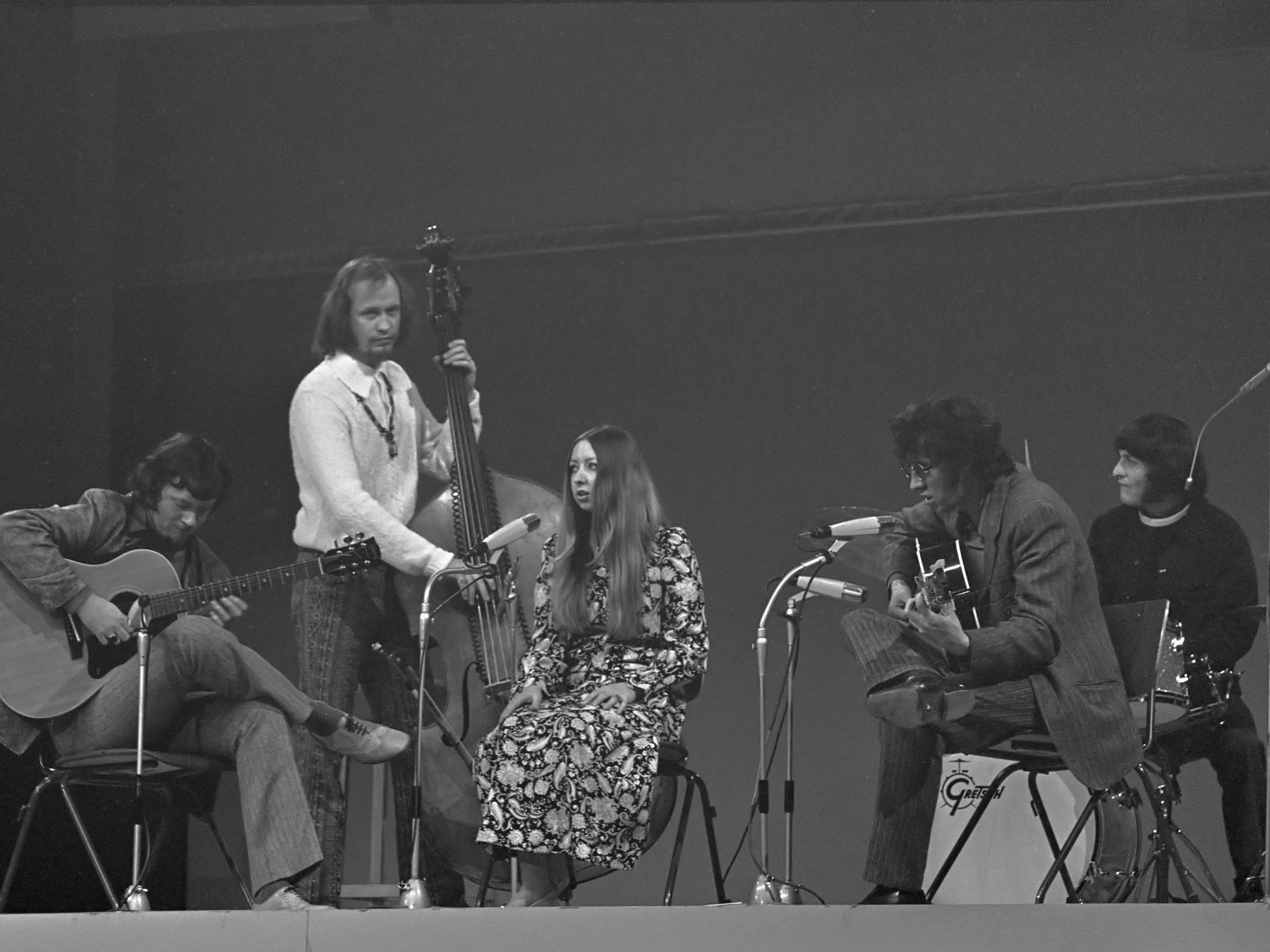

A five-track album with an unusual side break
Pentangle’s Cruel Sister is a 1970 Transatlantic album whose original U.K. issue is catalogued as TRA 228. Its original LP has five tracks: four shorter pieces on side one and “Jack Orion,” an extended traditional ballad, alone on side two. That layout gives the album a very different listening task from a typical collection of similarly sized songs. You are choosing between a concise first side and one sustained narrative performance.
The album discography at Mainly Norfolk lists the U.K. release, side sequence, contributors and recording credits. The Official Charts Company separately records the Transatlantic TRA 228 issue and its first chart date in December 1970. Those two sources help anchor identity; neither proves the mastering or condition of an individual copy.
Match the five-track program
Side one runs “A Maid That’s Deep in Love,” “When I Was in My Prime,” “Lord Franklin,” and “Cruel Sister.” Side two is “Jack Orion,” listed at about eighteen and a half minutes in the discography. Some summaries round its duration toward nineteen minutes. Use the approximate length as a listening orientation rather than an exact test: timing can vary with playback speed, edition and database rounding.
For a used copy, this side map is an efficient completeness check. Ask for label and sleeve images that show all four side-one entries and the long final track on side two. An expanded set or compilation may rearrange the program or add material, so do not assume that a longer listing represents the standard LP. If an edition claims bonus tracks, verify the package format and where those tracks appear.
Listen to the first side as four different introductions
Give side one one uninterrupted play before comparing individual tracks. Then return to “When I Was in My Prime” and “Lord Franklin.” The discography identifies the former as traditional and the latter as traditional in arrangement; listen for how the group lets the vocal carry a narrative while the accompaniment frames it. Write down whether the pulse feels steady, floating or interrupted. That observation is more useful than labeling the entire record medieval or jazz-folk from one moment.
On “Cruel Sister,” follow the changes in vocal perspective and the way the accompaniment supports the ballad’s unfolding story. The recording credits name Jacqui McShee as vocalist and list several parts across Pentangle’s players, including guitar, bass and percussion. Instrument assignments vary by track; do not assume every listed musician plays on every song. If you want to identify a sound, compare it with the track-level credits rather than guessing from the album-wide personnel.
Make a map for “Jack Orion”
The discography lists “Jack Orion” as the fifth track and the whole second side. A 2025 review describes it as a roughly nineteen-minute narrative about a servant, an enchanted fiddle and his master’s sweetheart. Treat that as a signpost, then listen for how the musical passage develops.
Use a three-stop map: note the opening voice and instrument, one texture change, and the closing stretch. A timer can help, but do not interrupt the side to chase exact seconds. The goal is to follow the broad arc as one continuous performance.
Long performances can make a collector worry about surface defects, but length itself is not evidence of a problem. Listen for a sound that repeats at the same rotational position, a skip that returns consistently, or distortion that follows one groove region. Compare across a different record to check your stylus and setup before attributing every noise to Cruel Sister. A continuous narrative can make a repeated tick especially noticeable, so ask sellers whether they tested the entire side rather than only the opening seconds.
Identify the package you mean
The original LP is a five-track, two-side work. Later CD editions, box sets and compilations may combine album tracks with other recordings or change the presentation. Cherry Red’s The Albums: 1968–1972 box-set listing describes its own multi-disc package; it is useful for understanding that edition, not for authenticating a 1970 LP. Confirm whether a listing is a standalone Cruel Sister, a later reissue, or part of a larger set before comparing it with a price or a collection.
Some album databases use a particular release year or country as their default even though variants followed in other markets. Make a small identity record for the copy: country, label, catalog number, format, track sequence and any runout inscription. For a U.K. Transatlantic candidate, TRA 228 is a useful starting identifier. It is not enough by itself to tell whether the jacket and disc belong together, whether the disc plays well, or which lacquer was used.
Inspect the actual disc and sleeve
Request clear photographs of the front, back, spine, both labels and the dead-wax area on both sides. Compare the jacket design, label wording and catalog number to the specific edition you intend to buy. Community release databases can show images and recorded variants, but they are user-contributed references; corroborate the details against the actual item and a second discographic source where possible.
Ask the seller whether the record has been played through. For this album, specifically ask whether the full second side was tested and whether “Jack Orion” has repeatable clicks, skips or distortion. Look at both record surfaces under angled light for scratches, scuffs, residue and warping. Inspect the jacket for seam splits, ring wear, writing and water damage. A clean-looking disc can still produce noise, while a minor sleeve defect does not necessarily mean the grooves are damaged.
Avoid making a value decision from one visual feature or a scarcity adjective. The research used here supports an album identity, track layout and documented reissue context; it does not establish a universal best-sounding pressing, current market value or a label-color authentication rule. If the seller claims an especially early or rare variant, ask for the complete evidence set and compare all fields before paying extra.
Choose it for the listening experience you want
Choose Cruel Sister for a short four-song side followed by one extended narrative. If you prefer even song lengths or a quick overview of Pentangle, start with another studio album or an anthology.
For a purchase, verify program, territory, catalog and condition before weighing edition-specific sound claims.