Vintage Rock Vinyl
The Dark Side of the Moon: Choose the Studio Album or Wembley 1974
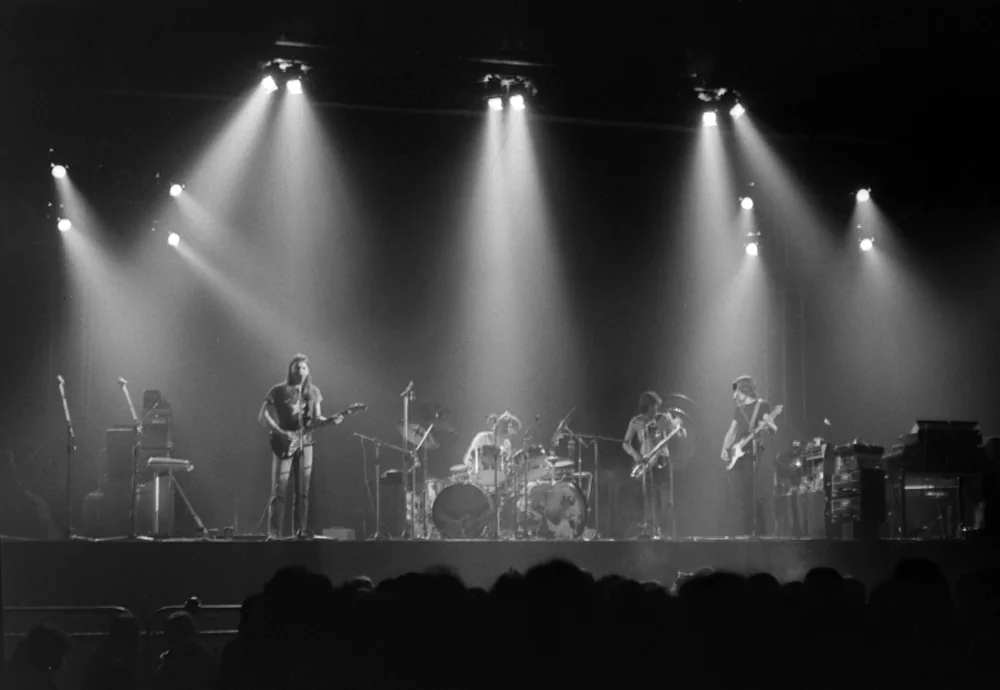

Choose a studio album or a particular performance
Pink Floyd’s The Dark Side of the Moon is available as the 1973 studio album, as concert recordings and in collections that include both. The titles may look familiar across those releases, but the performances and formats are different. Decide whether you want the original studio sequence, a live comparison or a package with surround mixes before evaluating a listing.
The band’s studio-album page explains that the music was developed in live performance before the album was finished. That history makes a concert edition an interesting comparison, but it does not make a 1974 concert the studio record. If you want the experience most people mean when they refer to the 1973 album, look for a clearly identified studio release. Add a live performance when you want to hear how the music works in another setting.
Follow the two sides as a sequence
The 50th-anniversary album page lists “Speak to Me,” “Breathe (In the Air),” “On the Run,” “Time” and “The Great Gig in the Sky” on side one. Side two begins with “Money,” followed by “Us and Them,” “Any Colour You Like,” “Brain Damage” and “Eclipse.” A physical LP has a necessary interruption between the sides. A digital edition may index transitions differently, so verify the content rather than inferring an extra performance from a track boundary alone.
Begin by following transitions instead of selecting favorite songs. Listen to how the opening gives way to “Breathe,” and then to the change of activity in “On the Run.” On another pass, note how your attention moves from the introduction of “Time” into its song. You do not need to identify every recorded sound to hear that these transitions shape the experience.
After turning the record over, compare the arrival of “Money” with the closing sequence from “Brain Damage” to “Eclipse.” Write down one change in rhythm, texture or vocal emphasis that helps you follow the side. If you have only heard isolated tracks, this exercise shows what changes when they are heard in the surrounding order. It also gives you a meaningful listening purpose for the physical format instead of relying on an assumption that vinyl necessarily sounds better.
Compare Wembley with the studio
The official Wembley ’74 page identifies the performance as a November 1974 concert recording and lists the same broad album program across two LP sides. It also states that the vinyl edition uses slightly edited versions of “Money,” “Any Colour You Like” and “Eclipse.” If complete performance length is important to you, check the format and exact release rather than assuming the LP and every digital issue use identical edits.
For a focused comparison, choose a short section of “Time” or “Money.” First hear the studio version and note the role that catches your attention. Then listen to the named Wembley performance and note how the ensemble and live setting change your experience. Keep the playback level similar. Audience ambience, a different performance and a later mix can all affect the result, so avoid attributing every difference to the record format.
You can also compare the order in which sounds enter. If a passage feels longer or more spacious, check its timing rather than relying only on memory. A live arrangement may extend or compress parts of a piece, while an edited LP can have its own length. Record the exact edition and format in your notes; “the live one” is too vague when several concert releases exist.
Read the 50th-anniversary box contents
The official 50th-anniversary box listing describes a 2023 remaster of the studio album on CD and LP, plus the Wembley performance on CD and LP. It also lists audio Blu-rays and a DVD with stereo and surround options, books and replica items. This is a specific package: check another edition’s product list independently, even if its design also uses anniversary branding.
Choose the standalone studio LP if the album sequence is your main interest. Choose the Wembley release if you want that concert on its own. The box makes sense if you will use several formats or value the accompanying materials. Buying more discs does not establish that a copy sounds better, and a remaster credit does not by itself describe every stage of a tape or cutting chain.
If you want the surround mixes, check your equipment before buying. A Blu-ray audio disc requires a compatible player, and multichannel output requires a compatible setup. The box includes separate stereo and surround options, but your player and connections determine what you can access. Read the specific disc and device instructions rather than assuming that a CD player will play a Blu-ray or that two speakers provide the same channel layout as a surround system.
Inspect the sleeve, inserts and disc
The official standalone 50th-remaster LP listing describes a gatefold jacket with posters and stickers. Those inclusions belong to that listed product; an older or differently packaged edition can have another set of contents. Ask the seller to show what is actually included and describe the condition of each item. Missing inserts affect completeness if they matter to you, but they do not prove the record itself is damaged.
For a used LP, request photos of the front, back, spine, both labels and runout markings. Compare the country and catalog number with a record for the exact edition. A prism image, a printed copyright year or a label color alone cannot establish the full identity of a pressing. Avoid paying for an “original” claim until the seller has supplied the relevant details.
Inspect both playing surfaces under angled light for scratches, scuffs, residue and visible warping. Ask whether the seller has played the disc and whether any repeated noise appears in quieter transitions. A visual grade is useful but does not guarantee playback. A sealed copy likewise limits what can be inspected; ask about return terms before opening an expensive purchase.
Finally, compare delivered price, format compatibility, completeness and condition against the purpose you chose. The sources identify the studio album, Wembley performance and particular anniversary products. They do not establish a current value for an individual copy or a universally preferred mastering.