Indie Folk
Colour Green: Separate the Home Recordings from the 2006 Release

Start with the dates, not the legend
Colour Green is easy to describe as a lost folk album, but “lost” collapses several events into one. Sibylle Baier made the home recordings in Germany between 1970 and 1973. They circulated privately among family and friends for years. Orange Twin Records released the album commercially on February 7, 2006, under catalog number OTR022. Those dates answer different questions: when the performances were captured, when people close to Baier could hear them, and when a label issued a product to the public.
Keeping those stages separate is useful whether you are discovering the music or comparing a seller’s listing. A copy dated 2006 is not evidence that the performances were recorded then. Conversely, the early recording date does not make every later LP a first pressing, a direct transfer from the original reels, or a superior-sounding edition. The label’s own product page offers LP and CD formats but does not identify the mastering chain for each format.
What the sources establish
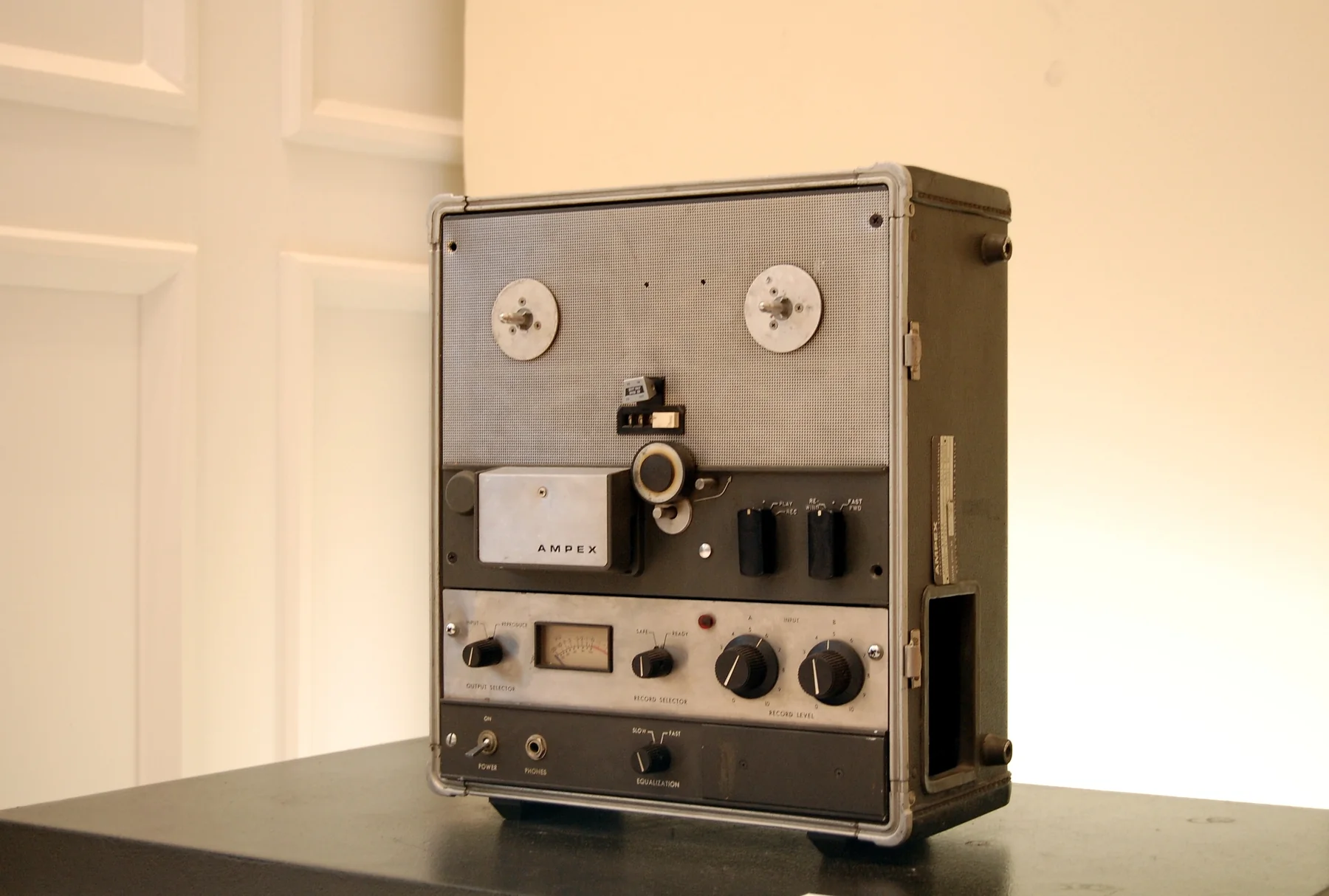
The record label and a Goethe-Institut interview with Baier, her son Robby, and Orange Twin co-owner Andrew Rieger describe a home recording made on reel-to-reel equipment. Baier recounts working out how to position a microphone and making repeated attempts at songs. That is more specific than the vague phrase “recorded at home,” but it still does not identify a machine model, tape speed, microphone, room dimensions, or the condition of the reels when the album was assembled.
The same interview traces a path from family copies to wider circulation through several people, including Dinosaur Jr.’s J Mascis and the Athens label. This is a chain of recollections, not a complete archival log with dates for every copy. It is enough to reject the oversimplified version in which a single stranger finds a forgotten master and instantly turns it into a hit. Baier’s private recordings were shared within a small circle before the commercial release.
There is a small source conflict worth noticing. Orange Twin’s artist page and the product page identify 1970–1973; one sentence on the product page also says “late 70s.” That phrase conflicts with the page’s explicit range and the interview context. The stronger repeated evidence supports the early 1970s, so treat “late 70s” as an unresolved page inconsistency rather than a second recording period.
Listen for what intimacy does and does not tell you
The home setting can guide a first listen, but it should not dictate what you hear. Try the album once without reading its origin story. Write down what is actually audible to you: how close the voice feels, how the guitar supports the melody, whether you notice room sound, and where a pause changes the mood. Keep observations separate from explanations. “I hear a soft attack on the strings” is a listening note; “the tape is damaged” is a technical claim that needs evidence.
On a second pass, read the song titles and consider the range of subjects rather than forcing every song into a single biographical episode. The label and interview identify “Remember the Day” as connected to a road trip and as Baier’s first song. That context can deepen one track, but it does not establish that the whole album is a travel diary. Ask which songs feel like recollection, which seem to describe ordinary life, and which refuse an easy narrative. The interview also captures Baier’s own uncertainty about how listeners might interpret one of the songs. Leaving that uncertainty intact is more respectful than presenting a tidy meaning as fact.
For a third pass, focus on arrangement and recording texture. Notice whether the guitar is carrying harmony, rhythm, or both, and whether the vocal sounds deliberately close or simply captured in a small room. Do not treat a little noise, a narrow image, or an intimate performance as proof of analog “warmth.” These are qualities you can describe as a listener; they do not establish the condition or provenance of a particular tape source.
Choose a format for the way you will use it
Orange Twin identifies OTR022 as the release and lists both LP and CD. If you want to play the album on a turntable, the LP format fits that use; if you want compact storage or easy playback in a car or computer, the CD may be more convenient. The product listing does not provide evidence that one format uses a better tape transfer. Do not infer a source chain from the word “reel-to-reel” in the recording story.
Before paying for a used copy, ask the seller to photograph the front and back cover, the disc label, and the catalog number. Match the exact country, format, and catalog identifier against a release-specific listing. Confirm that the pictured object is the one being sold; a stock image cannot show its actual sleeve wear or record condition. For an LP, request a clear image of the runout area if the seller is making a specific pressing claim. A number in the dead wax can help identify a cut, but it does not by itself prove what source tape was used.
If the listing says “original 1970s pressing,” ask for evidence of a release from that period. The commercial Orange Twin edition is dated 2006, even though the recordings are older. The album’s recording era and the record’s manufacturing date are not interchangeable. A seller may use “original recording” to mean that the performances are original; clarify whether they mean the original tapes, the first commercial issue, or simply the album rather than a later compilation.
A practical listening and buying decision
For a first listen, choose any legitimate edition that lets you hear the album conveniently. Treat the early-1970s recording dates as context, not as a promise about sound quality. On a second listen, write down one musical detail and one question per song; then compare those notes with the interview without replacing your own reading with the artist’s biography. For a physical copy, verify OTR022 and the format, inspect the actual record and sleeve, and ask what claim the seller means by “original.”
The most reliable description of Colour Green is not “a lost tape that sounds better than a studio album.” It is a set of intimate home performances recorded in Germany in the early 1970s, privately shared before Orange Twin issued them in 2006. That account leaves room for what makes the music moving while keeping each date and each edition claim attached to the evidence that supports it.