Indie Folk
Just Another Diamond Day: Follow the Songs Without Turning Them into a Travel Diary
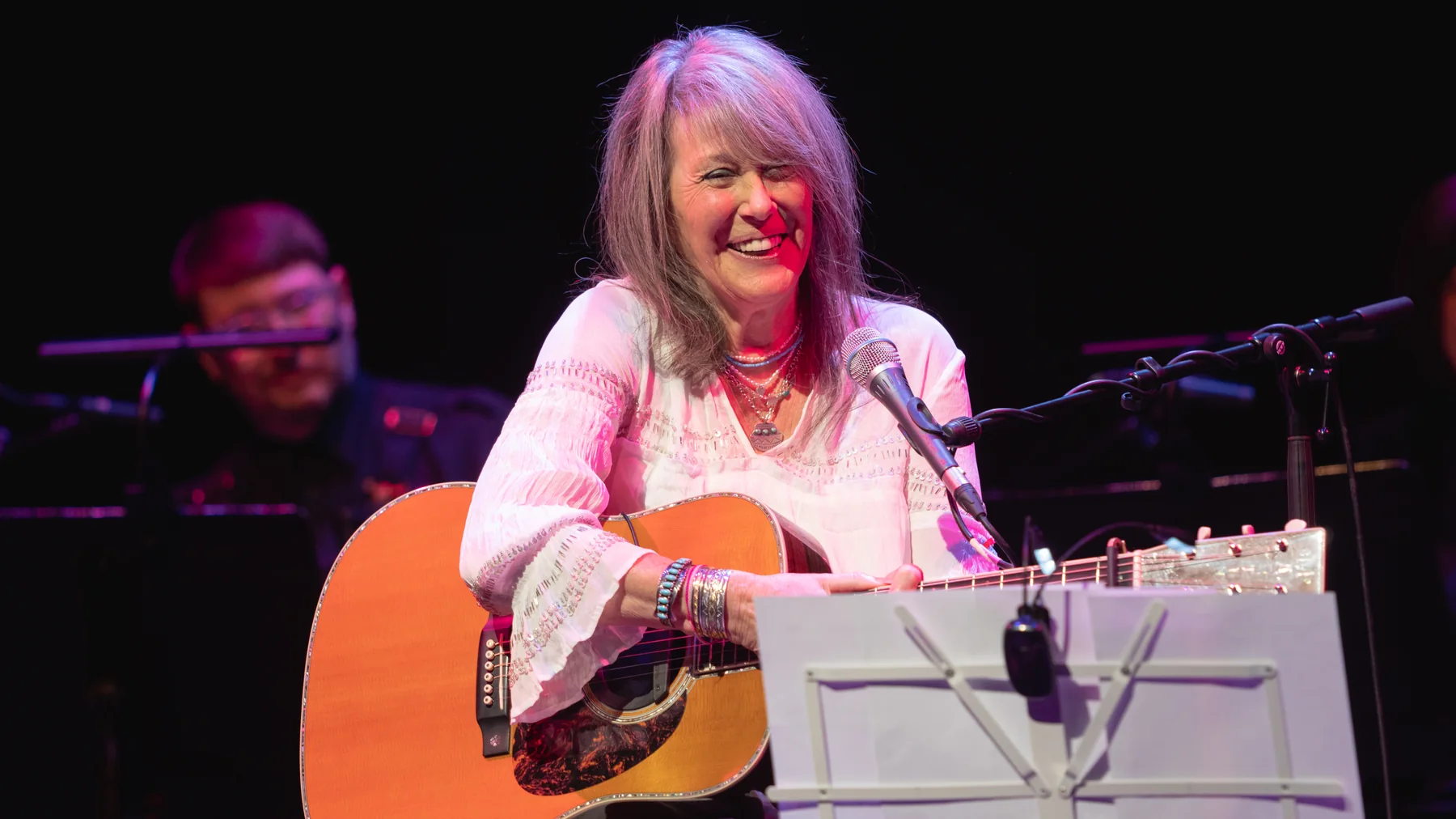

Just Another Diamond Day is often introduced through the horse-and-wagon journey that inspired its songs. That context is useful, but it can also create a misleading picture of how the album was made. In a 2024 interview, Vashti Bunyan said she wrote the songs along the route and recorded them with Joe Boyd in 1969; an earlier Terrascope profile dates the assembled session to 1968. These published accounts differ, so treat the exact session year as uncertain. Bunyan also said that she and her companions continued beyond Skye to the Outer Islands. The album appeared at the end of 1970. It is a studio record made after the journey, not a field recording made along the road. Use the fourteen-song Philips LP sequence as a map for hearing the songs and arrangements on their own terms.
Follow the original LP from its opening side
The original Philips program begins with “Diamond Day,” then “Glow Worms,” “Lily Pond,” “Timothy Grub,” “Where I Like to Stand,” “Swallow Song” and “Window over the Bay.” Those seven titles make a manageable first side for a short listening session. Rather than treating them as a literal travel diary, notice the different places and images named by the songs, then ask how the sequence changes your sense of movement. The titles are prompts for attention, not proof that each song documents a particular stop on the route.
The production credits give you another way to listen. Bunyan is credited with vocals and guitar, Joe Boyd produced the record, Jerry Boys engineered it, and Robert Kirby arranged strings and recorders for selected songs. Other musicians associated with the session include Robin Williamson, Dave Swarbrick and Simon Nicol. These details are useful because the album’s gentle scale does not mean every sound is a solo performance. Try listening once to Bunyan’s voice and guitar, then again to the supporting instruments and note where the arrangement becomes more noticeable to you.
Continue through the second side
The other seven original titles are “Rose Hip November,” “Come Wind Come Rain,” “Hebridean Sun,” “Rainbow River,” “Trawlerman’s Song,” “Jog Along Bess” and “Iris’s Song for Us.” Keep the sequence in front of you if you are comparing a modern edition with a used LP. Track titles sometimes appear with different punctuation, capitalization or apostrophes in catalogues, so match the full run of titles rather than treating one spelling difference as a different composition.
For a practical listening exercise, choose one short song and one longer song from the sequence. Write down which instrumental detail you noticed first and whether that detail returns later. You can also choose a song with a credited string or recorder arrangement and compare it with a passage where the guitar is your main guide. This is a way to make the album’s textures audible without asserting an unsupported arrangement for every bar or turning a quiet folk record into a set of grand genre labels.
Keep the journey story in proportion
Bunyan’s own account is the best guard against an over-neat origin story. She described writing songs during a long trip with her partner, their horse and dog, and a small wagon. The journey took more than a year. She said the songs were written before the group reached Donovan’s property on Skye; they spent only a short time with him and continued onward when there was no place for them to stay. That sequence matters because later summaries sometimes compress the story into “she went to Skye and made the album there.” Her interview places the songwriting, destination and recording in separate stages.
The album came out near the end of 1970. Bunyan has described feeling unsure about some of the folk arrangements while valuing Kirby’s string and recorder settings. You do not need to adopt her view as a verdict on the record. Instead, it gives you a question to test: which arrangements feel closest to her guitar-and-voice songs, and which ones introduce a different color? That turns biographical context into a listening task instead of a myth that substitutes for the music.
Separate the fourteen-song LP from bonus material
The fourteen-song Philips LP sequence is distinct from the additions on the 2000 Spinney CD. A specialist discography lists early singles and previously unreleased recordings after the original program, including “Love Song,” “I’d Like to Walk Around in Your Mind,” “Winter Is Blue” and a second version of “Iris’s Song for Us.” Those are valuable context for listeners interested in Bunyan’s earlier work, but they are not extra songs on the original Philips LP.
When you see a copy with more than fourteen selections, check where the added tracks begin and how the product labels them. A reissue may put bonus songs on the same disc after the album, on a second disc or in a digital version with a different layout. Keep a note of the exact catalog number and track sequence. If you are buying a copy for the original program, a bonus count is not a substitute for confirming all fourteen titles in order. If you want the broader chronology, choose an edition that identifies the earlier singles and demos clearly.
Choose a copy for listening, not for the story alone
The original Philips LP catalog number commonly associated with the UK issue is 6308 019. Treat that as a clue to investigate, not an authentication guarantee. Compare the catalog number, country, label, sleeve and track list in a release-specific database, and ask for label and runout photographs if the seller calls a copy an original. A later reissue can be a perfectly reasonable listening choice; the point is to know which object and program you are buying.
For a first listen, play the original fourteen tracks in sequence and choose one arrangement to revisit. For a second listen, add the bonus material only after finishing “Iris’s Song for Us.” That lets you hear how early singles and demos relate to the album without blurring the boundary between them. Do not treat a quiet recording, a pastoral cover or a horse-and-wagon anecdote as evidence about a pressing’s age or quality. Let the edition record identify the copy and let the performance decide whether the album belongs in your collection.